A Field of Clover
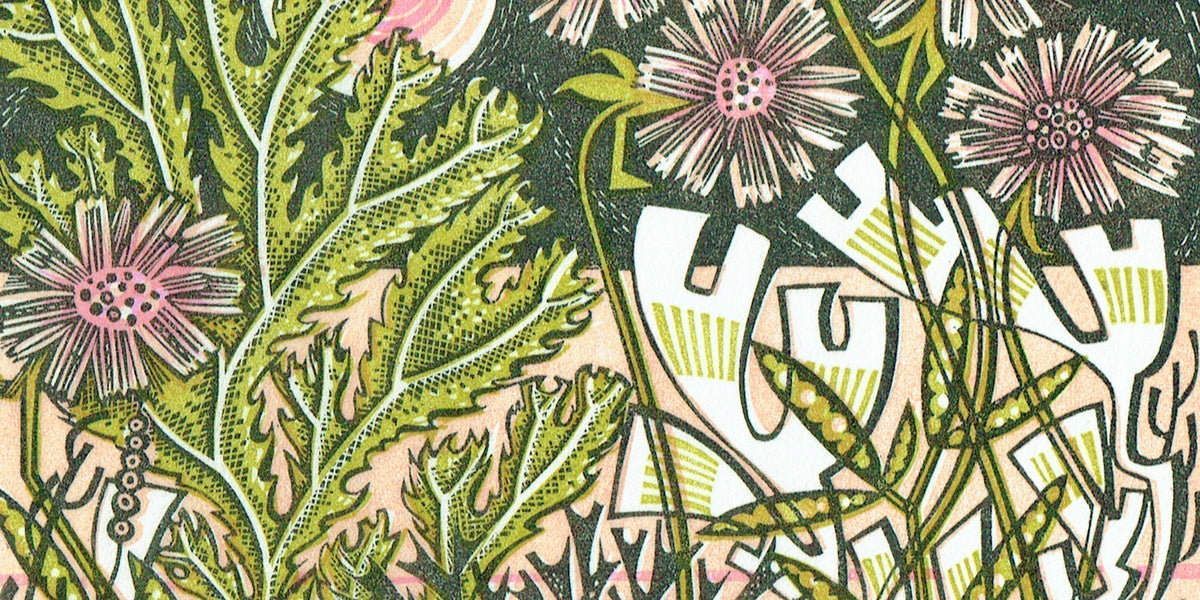
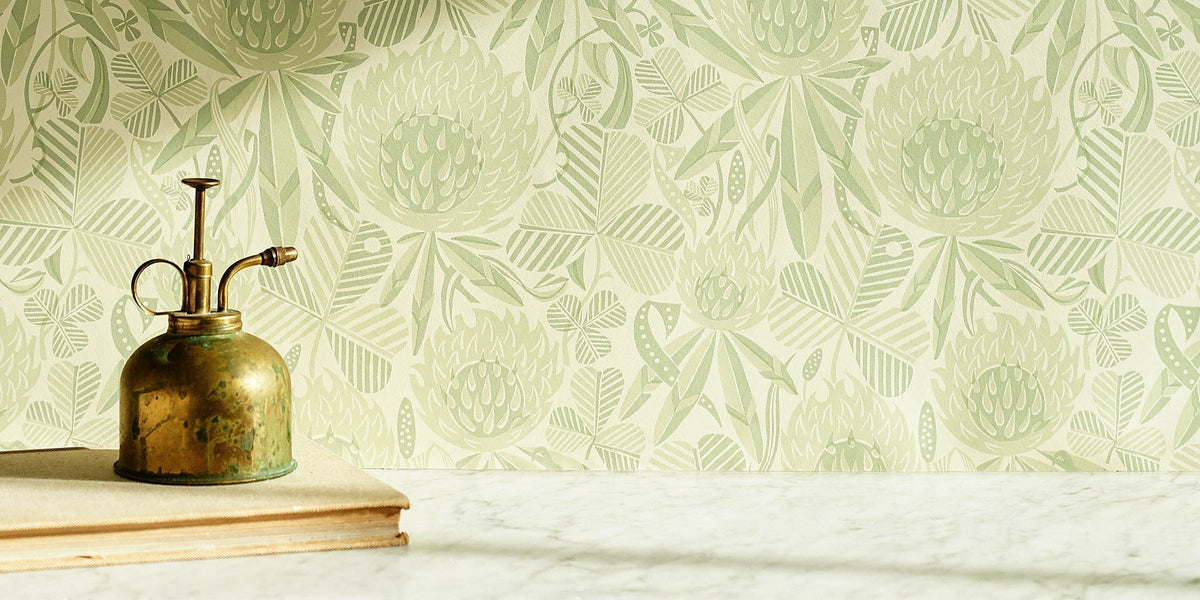
Clover and daisies dotted through a grassy field, and the hum of bees moving between them, bring back memories of warm summer days. Clover's three-lobed leaves, which give the plant its Latin name, Trifolium, and its rounded heads of tiny red and white flowers may seem small and insignificant. Studied closely, though, they have a strong graphic quality. Each leaflet carries a pale marking (a crescent on white clover, a V-shape on red), and each flower head is a tight cluster of individual flowers, shaped like those of its relatives in the pea family. I hope I've captured some of this in my Clover fabric and wallpaper for St Jude's, developed from an original wood engraving of the same name.
A few years ago, photographer Jeremy Phillips visited my former Edinburgh home to look at the making of the design for Period Living magazine. Below are a few of Jeremy's photographs, along with some studio shots of the finished fabric and wallpaper.
Clover also has a chapter of its own in The Book of Wildflowers, my second collaboration with the writer Christopher Stocks. My botanical paintings and prints sit alongside Chris's writing on each plant's natural history, and his chapter on clover begins:
Finding a four-leaf clover was always a magical moment as a child, though I've long since lost the ones I carefully pressed between blotting paper to preserve; I wonder where they are now? We say clover as if it's a single plant, yet there are around thirty species of clover in Britain alone, including the intriguingly named Subterranean clover, which inverts its seedheads after flowering and presses them down into the ground beneath.
Find out more about my series of books with Christopher Stocks.